The Overlooked Advantage: Why Every Driver Should Be Taking Track Notes
Author
The Delta
Date Published
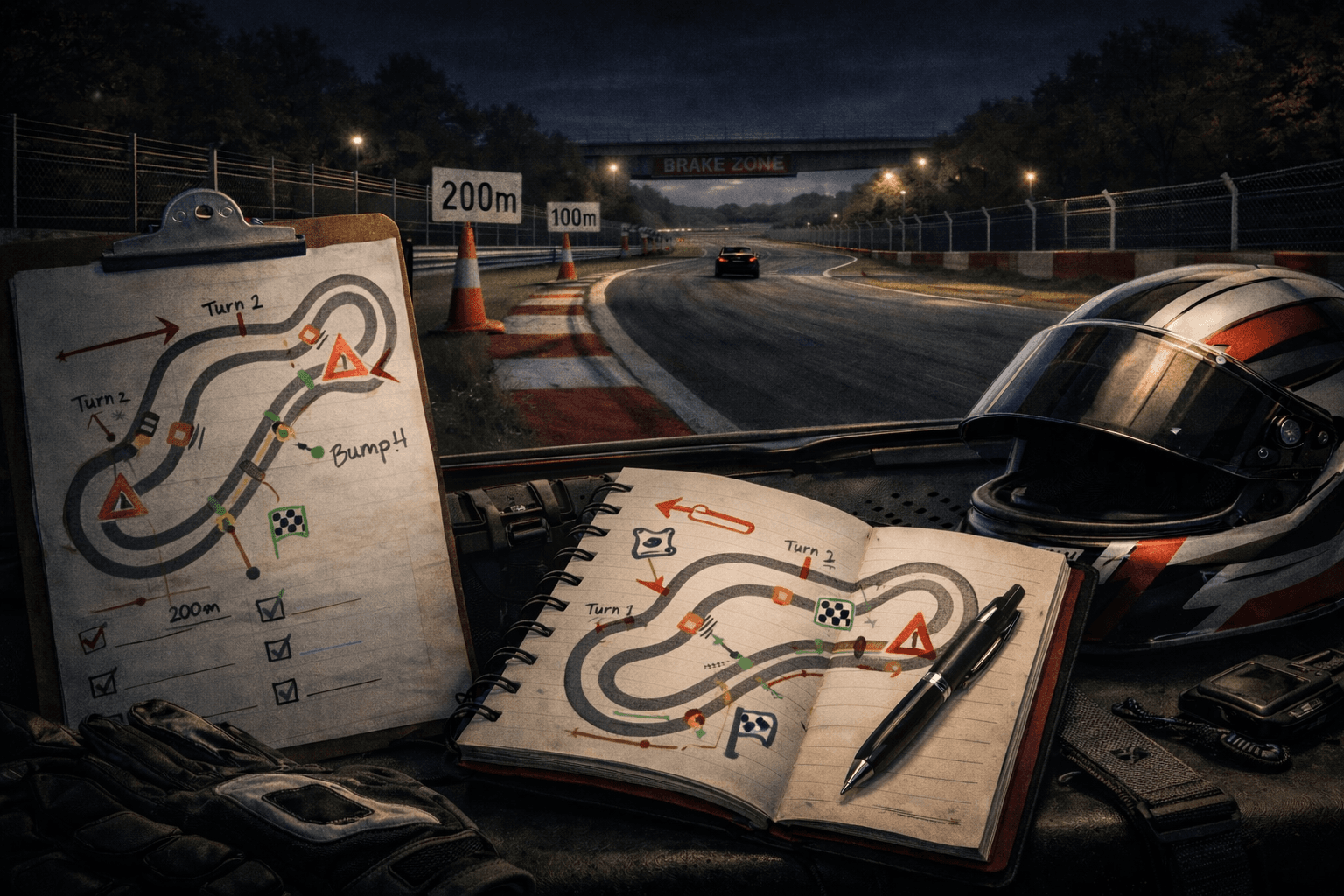
In the world of motorsport and track days, drivers spend hours dialing in setups, watching video, and running lap after lap in search of tenths. Yet one of the simplest, most powerful tools for improving performance gets ignored by most: track notes.
We’re not talking about engineering reports or post-race debriefs. We mean your personal notes—the kind you jot down between sessions, on a printed track map or in a notebook. Observations. Impressions. Reference points. Corrections. Wins and losses. Over time, these little scribbles become a roadmap to faster, smarter driving.
Why It Matters
When you show up at a track, especially one you haven’t driven in a while, there’s often a slow ramp-up: re-learning where the grip is, where the braking zones actually begin, which corners feel tighter than they look. But if you have well-kept track notes, that ramp gets shorter. You arrive with context, with a plan, and with confidence.
More importantly, writing notes forces you to process what you experienced. Instead of letting a good session fade into memory, you capture what worked and what didn’t. That reflection is where the real learning happens.
What to Write Down
You don’t need to be a writer. And you don’t need to capture everything. Just focus on what’s meaningful to you. For example:
- Where you braked, and where you think you could brake.
- What gear felt best in each corner.
- Surface quirks: bumps, camber, grip levels.
- Line adjustments that worked—or didn’t.
- Mental notes: where you hesitated, where you committed.
- Any physical sensations or car behavior you want to remember.
Some drivers sketch the ideal line through tricky sections. Others jot a single word near each turn. The format doesn’t matter. What matters is that it’s honest and helpful to future-you.
When to Do It
Right after a session is ideal. Your senses are still lit up. The corner you nailed, or botched, is fresh in your head. Don’t wait until the end of the day. It doesn’t have to be pretty. Just get it down while it’s real.
And then, most importantly: review before you go back out. Even two minutes with your own notes can change the way you attack your next session. Small adjustments compound.
Make It a Habit
Track notes aren’t just for beginners. They’re for anyone serious about improvement. They sharpen your awareness, accelerate your learning, and turn every lap into a lesson.
At CTD, we believe in this practice so much that we’ve built a dedicated Track Notes Editor and Library for our drivers. You can pull up track maps for all of the iRacing tracks, add your notes digitally, and organize them for future events. It’s a smarter way to build your personal driving database, and a great way to swap insights with other drivers.
Bottom line: Track notes are a low-effort, high-return habit. If you’re not already doing it, now’s the time. Your future self at the next event will thank you.
Already a part of the Academy, want to give it a shot? Jump into the Track Notes from your driver profile and start building your own notes. We’ve got the maps ready, you bring the insights.
Not a member and this sounds cool? Join our wait list, we recruit often!
References: